Stuart Burch
www.stuartburch.com
  • 01 Home
  • 02 Articles
  • 03 Blog
  • 04 Big Ben
  • 05 Reviews
  • 06 Talks
  • 07 Contact
  • 08 Search
  • 09 Twitter
  • 10 Etisarap

Sounds of the city

27/8/2011

 
Pedestrian crossing outside Dramaten in Stockholm
Pedestrian crossing near Dramaten, Stockholm
Cities are remarkable but potentially overwhelming places. Our brains are constantly striving to make sense of a flood of sensory information. There is simply too much to take in. So our minds unconsciously filter out extraneous details: sights, sounds, smells, textures - even tastes.

An example of what I mean is contained in the image and sound file included in this blog posting.

What could be more mundane and unremarkable than a street crossing?

Well, as a matter of fact this piece of utilitarian street furniture helps make a place distinct. Shape, colour, design and technology vary from country to country. So too does the "language", i.e. the symbols and sounds. They function like dialects: strange enough to be noteworthy, but familiar enough for us to make sense of them - even if we are visitors from distant lands that possess alternative species of street crossings.

So the clicks and beeps, flashing lights and illuminated signs all play their role in making somewhere familiar or strange.

We could illustrate this by documenting pedestrian crossings in various countries and using the resulting collection of images and sounds as the basis for a compilation of city effects.

Remember too that this would be a snapshot in time. There was an era when the towns and cities of Sweden did not  resonate to the clickings of its pedestrian crossings. When did they arrive? Who decided that they should click and not beep? And who determined on the duration of the beat?

These metronomes will surely disappear one day. They'll be replaced with something new or nothing at all. Will Swedes mourn their loss? Or will they listen to the silence, scratch their heads and ask: something's different, something's missing... but I can't quite put my finger on what's changed...

Press here - Swedish style
Above: Pedestrian crossing in Stockholm, 27/08/2011, 01:08

A bevy of beautiful busts

27/8/2011

 
Fredsmonumentet, Karlstad (Ivar Johnsson, 1955)
The Peace Monument, Karlstad (23/09/2005)
The Guardian newspaper has published a selection of the "UK's best sculptures of women". Its compiler, Laura Barton, enthuses that the "UK is alive with beautiful sculptures of women" (Barton 2011). Alas, her sweet selection of lovely ladies confirms observations made years ago by the likes of Janet Monk (1992) and Marina Warner (1987). They point out that our streets and squares are swamped with statues of men but hardly any women. Yes, the latter do appear, but almost always as abstract, moralising symbols which, according to Marina Warner, "hardly ever interact with real, individual women" (Warner 1987: 28).

With this in mind, Barton ought to have sought out real women who have distinguished themselves by their beautiful achievements rather than their beautiful breasts. Candidates might include the Emmeline Pankhurst memorial near the Houses of Parliament (Arthur George Walker, 1930). Or how about Mark Quinn's Alison Lapper Pregnant that once graced Trafalgar Square's "Fourth plinth" (Burch 2009)?

One positive outcome of The Guardian's bevy of beauties is the reactions of some online readers. They have used the list to promote statues of "missing" women. A case in point is crittero, who laments the lack of a public monument to Mary Wollstonecraft "'founder' of women's movement". Meanwhile, MissB1983 has provided a link to a very interesting article concerning "Women's erasure from women's memorials" (Dougherty 2011).

_________
References

Barton, Laura (2011) "Female forms", The Guardian, 25/08, accessed 27/08/2011 at,
    http://www.guardian.co.uk/lifeandstyle/2011/aug/25/female-uk-sculptures-women
Burch, Stuart (2009) "Trafalgar Square: a public lecture", 09/08, talk given on Trafalgar Square's
    "fourth plinth" as part of Antony Gormley's One & Other (6th July - 14th October 2009). Transcript of talk.
Dougherty, Carolyn (2011) "Women's erasure from women's memorials", 16/06, the f word, accessed 27/08/2011 at,
    http://www.thefword.org.uk/features/2011/06/womens_erasure_monuments
Monk, Janice (1992) "Gender in the landscape: expressions of power and meaning",
    in Kay Anderson and Fay Gale (eds.), Inventing Places: Studies in Cultural Geography,
    Melbourne, Longman Cheshire, 1992, pp. 123-138
Warner, Marina (1987) Monuments and Maidens. The Allegory of the Female Form, London, Pan Books

Sites of sickening sights

26/8/2011

 
Majdanek, Lublin
State Museum, Majdanek near Lublin, 13/11/2008
Tourism takes many forms. One variety goes by such names as dark, disaster or grief tourism. In addition, "Thanatos" - the Greek word for death - has given rise to the concept of thanatourism (Seaton 1996). This has led to an extensive itinerary of "fatal attractions" (Rojek 1999) for "tombstone tourists" to visit (see e.g. Stanton 2003).

The motivations for taking such journeys vary. Travelling to a site of genocide is, for many, a pilgrimage - part of a duty of remembrance and a hope that we might learn from the past to avoid making the same mistakes in the present. Others, however, visit places of death for reasons that are far more prurient. Some people gain positive pleasure and excited curiosity from the pain and suffering of others.

Steps therefore need to be taken to discourage this from happening: to prevent "black spots" (Rojek 1999) of the wrong sort from appearing on the tourist map (1). This explains the decision by Gloucester City Council to purchase a house - and immediately demolish it. The property in question - 25 Cromwell Street - was once the home of Frederick and Rosemary West. They killed women and girls there and hid the bodies around the house and in the garden. The local council saw to it that everything connected with this place of murder was ground to dust. The site was then covered in concrete. These steps were taken in order to stop the relics becoming grisly commodities to be bought and sold by collectors of the macabre (Moyes 1996).

I was reminded of this after reading that the cellar of Josef Fritzl's house is to be pumped with concrete. This should ensure that the place where his daughter was imprisoned can never again be entered. It seems, however, that no decision has been reached regarding the house, which still stands in the Lower Austrian town of Amstetten (AP 2011).

The decision to entomb the Fritzls' cellar might not prevent it from being reopened in the future. Years from now public attitudes could allow it to be carefully restored and made accessible to curious tourists. There is a precedent for this, albeit one that has absolutely nothing whatsoever to do with dark tourism: Eidsvoll is a famous tourist attraction in Norway due to its connection with the drawing up of the Norwegian constitution in 1814. In the latter part of the 19th century the cellar of the building was destroyed. It is now being restored ("recreated" might be a better word) in time for the bicentenary of 2014. Some have condemned this decision, arguing that the construction of a "fake" cellar will turn Eidsvoll into "democracy's Disneyland" (Engen 2011).

Norway, of course, is currently trying to come to terms with the terrorist attacks of 22 July that left 77 people dead. The sites of these killings plus all manner of places associated with the terrorist responsible provide fertile ground for dark tourism.

For a final reflection on some of these issues, let's mentally return to Fritzl's cellar. The decision to fill it with concrete is counterproductive. Its transformation has turned it in to an artwork akin to Rachel Whiteread's House (1993). This now-demolished project centred on 193 Grove Road, a regular end-of-terrace Victorian-era house in the East London borough of Tower Hamlets. Whiteread filled the interior with flowcrete. The bricks and roof were then painstakingly removed to reveal the uncanny inside-out home.

Even closer to the Fritzl "readymade" is Harald Persson's Nedgrävning (Burial). This was the name given to an art project  carried out in November 1994. The Swedish artist dug a hole in Picasso Park in Halmstad and buried a white, one metre cubed block of concrete. This event was largely forgotten, until a couple of years ago when it was included in an art guide to the town. Tourists can now visit the site... and see nothing at all. This is probably exactly what happens at the now-vanished 25 Cromwell Street in Gloucester and the sealed-up cellar of the Fritzl house in Amstetten.
_________

(1) This raises some vexing questions. Is it possible to distinguish between "good" and "bad" dark tourism? What is the "wrong" sort of dark tourist or the "wrong" sort of "black spot"? Or is appropriateness determined by the motivations of the visitor and the nature of the interpretation? If so, can anything become a visitor attraction?

_________
References

AP (2011) "Josef Fritzl basement to be filled with concrete", Associated Press, 12/08, accessed 26/08/2011 at,
    http://www.guardian.co.uk/world/2011/aug/12/fritzl-basement-filled-concrete
Engen, Øyvind Bosnes (2011) "Falsk historie om 1814", Romerikes Blad, 18/05, accessed 26/08/2011 at,
    http://www.rb.no/lokal_kultur/article5611181.ece
Lingwood, James (ed.) (1995) House, London: Phaidon
Moyes, Jojo (1996) "Fred West house to be demolished", Independent, 05/10, accessed 26/08/2011 at,
    http://www.independent.co.uk/news/fred-west-house-to-be-demolished-1356745.html
Persson, Harald (1994/2011) Nedgrävning. Fotografisk documentation (photographs by Joacim Bengtsson), Stockholm
Rojek, Chris (1999) "Fatal Attractions" in Boswell, D. and Evans, J. (eds.) Representing the Nation:
    Histories, Heritage and Museums, London: Routledge, pp. 185-207
Seaton, A.V. (1996) "Guided by the dark: from thanatopsis to thanatourism", International Journal of Heritage Studies,
    Vol. 2, No. 4, pp. 234-244
Stanton Scott (2003) The Tombstone Tourist: Musicians, New York: Pocket Books


Nordic bullets: bam, bam, bam

23/8/2011

 
Made in Värmland
A trip to Karlstad has provided more ammunition for my article "Banal Nordism: Recomposing An Old Song of Peace" (the title of the paper I gave at a recent conference in Tromsø).

The city museum's major summer exhibition is entitled, "Made in Värmland". It features an eclectic range of objects conceived or constructed in the region. Taking pride of place on the cover of the brochure is a close-up of a sleek, hard and very erect bullet. This was manufactured by Norma AS based in Åmotfors. (Surely only a Nordic armaments firm could take its name from a Bellini opera?)

This year Norma aims to produce 30 million bullets in 110 different calibre. And all this from a country that has only known peace for nearly 200 years...

Norma ammunition
No.16 AMMUNITION - Norma Precisions AB, Åmotfors

For musical accompaniment to this box of bullets, I recommend "Sundance kid" by the Swedish group, Kent.

A paper memorial

21/8/2011

 
MS Estonia receipt
Objects do not have an inherent value or significance. Instead, it is people - individuals and societies - that attach meaning and importance to things. As a consequence, anything can become special. Even an old scrap of paper. Proof of this can be found by clicking on the image to the left. In normal circumstances it would be quite unremarkable, simply a record of how much someone paid for a meal onboard a ship. However, the fact that it forms a link with one of the worst shipping disasters of the 20th century makes it very special. Indeed, it is so special that it could be preserved in a museum like Sjöhistoriska museet (Sweden's national Maritime Museum). This institution possesses a number of objects relating to the MS Estonia. This was the name of the ship that left the Estonian capital, Tallinn on 27th September 1994. Shortly after midnight of the following day it sank in the Baltic Sea resulting in the deaths of an estimated 852 passengers and crew.

Just over a year before that disaster my father-in-law was a passenger on that very same ship. At some point after it sank he came across his old receipt. He hadn't meant to keep it. He had simply forgotten to throw it away. If he had rediscovered it on, say, 26th September 1994 he might well have tossed it onto the recycling pile. Now he treasures it as a memorial of the disaster and as a reminder of how uncomfortably close he came to being a part of it.

Who knows, perhaps one day he might donate it to Sweden's Maritime Museum? If he does decide to do this it will be preserved by archivists and curators with the same care as that devoted to a rare mediaeval manuscript or a priceless painting. This is because the receipt forms an intimate link to a moment of history. This mundane little thing is something to which we can all relate. It is therefore far more effective than the large stone monuments that have been erected to commemorate the disaster. It's a tiny, fragile paper memorial to all those people who had the misfortune to travel on the MS Estonia just under one year and two months after my dear father-in-law.

Photography rules at Moderna Museet

17/8/2011

 
No photography at Moderna Museet
Up until the end of last year it was forbidden for visitors to take photographs at Sweden's Moderna Museet. But now the same practice is positively encouraged: in 2011 photographic images from the museum's collection have replaced all other art forms in the gallery spaces. Visitors are invited to add to this photofest by submitting their snapshots to the museum. These are then vetted before taking pride of place in front of Andy Warhol's cow wallpaper.

But traces of the abandoned rule banning photography are still in evidence. Behind the ticket desk can be seen an icon of a crossed-out camera. This is hard to remove: it's integrated into the Barbara Kruger artwork that currently covers the walls of the foyer.

The image accompanying this blog posting was taken in late December 2010, just after the ban on the public taking photos was lifted. It shows an easily overlooked "modified readymade". On close inspection it becomes apparent that the sign has been carefully altered. Artfully drawn lines radiate from the camera such that the sign was now intended to mean that photographs could be taken, only without a flash.

I wonder where this sign is now? Has it been preserved and accessioned into the museum collection? Just in case this did not happen, I've opted to document it here (click the image above). The photographed sign is a little parasite pointing out the arbitrary nature of museums. This capriciousness isn't very apparent, however, because their subjective and rule-bound nature is disavowed by a carefully maintained mantle of objectivity and properness.

Some simple questions:
If it is now alright to take photographs at Moderna Museet, why was it banned previously? What did the injunction achieve? Who invoked it and who revoked it - and for what reasons? Why was the rule change not even mentioned? Might the ban be reintroduced one day?

_________
Supplemental (03/09/2011)
The sign relating to no-flash photography has now been upgraded to a proper-looking laminated panel:

Dos-and-don’ts at Moderna Museet
Dos-and-don’ts at Moderna Museet, 30/08/2011

Statues: mortals with superman (sic) potential

17/8/2011

 
Amundsen by Paulsen, Tromsø, 1937

I'm not a prophet or a stone age man
Just a mortal with potential of a superman
I'm living on

Bowie, David (1971) "Quicksand", Hunky Dory, Rykodisc, 05:03

Paths of undesire

17/8/2011

 
An undesired desire path
In a previous blog posting I discussed the shortcuts people take when walking from A to B. If enough pedestrians follow the same route they cause erosion and, before you know it, an additional unofficial path is created: a "path of desire". But clearly not everyone finds them desirable. I found evidence of this in Bergshamra, just outside Stockholm. This can be seen by clicking on the image to the left. It shows a makeshift barrier that has been put up in an attempt to dissuade people from walking on the grass. Meanwhile, the image below shows that this seems to work: the grass has grown back and the desire path is left sadly unrequited.

Desire path RIP
Desire path RIP

Everyday is like Monday in Norrmalmstorg

15/8/2011

 
Fredrik Reinfeldt in Norrmalmstorg
Fredrik Reinfeldt, Norrmalmstorg, 15/08/2011
Norrmalmstorg is the name of a square in central Stockholm. In the early 1990s it was the site of popular gatherings in support of independence for the three Baltic States (then under Soviet rule). These demonstrations occurred every Monday at 12 o'clock. A total of 79 such events took place between 19 March 1990 and 16 September 1991.

Two decades later - at 12 o'clock on Monday 15 August 2011 - the Swedish Prime Minister plus his counterparts from Estonia, Latvia and Lithuania returned to the square to mark the twentieth anniversary of these so-called "Monday meetings" (måndagsmöten). They, plus other dignitaries and a large crowd of onlookers were invited to "go back in time". Twenty-year-old recordings of Swedish radio reports were broadcast on loudspeakers before Fredrik Reinfeldt was invited to address the gathering. In his speech he rightly celebrated Sweden's role in bringing about and helping to sustain the two decades of freedom and independence enjoyed by the Baltic States. Yet Sweden's current Prime Minister also noted that popular support for Baltic independence was not always shared by the political establishment in Sweden. Reinfeldt illustrated this point by raising aloft a copy of the history book that he used as a schoolboy in the 1980s. He drew attention to the fact that the Baltic States were rarely mentioned and that their fate after the Second World War was completely absent from the text book.

The Swedish Prime Minister's speech and the anniversary gathering as a whole is therefore an excellent illustration of how events of the past are forgotten and remembered in school classrooms and in public squares. Similarly, the role of anniversaries and the importance of place are underscored by this return to Norrmalmstorg twenty years on.

Arkadijus Vinokur & pupils from Estniska skolan i Stockholm
The poet Arkadijus Vinokur (left) & pupils from Estniska skolan i Stockholm

Speech given by the Swedish Prime Minister, Fredrik Reinfeldt in Norrmalmstorg, Stockholm shortly after 12 o'clock on Monday 15th August 2011 (in Swedish, mp3, 09:18).
Speech given by the Latvian Prime Minister, Valdis Dombrovskis (in English, mp3, 03:54).
Speech given by the Lithuanian Prime Minister, Andrius Kubilius (in English, mp3, 03:12).
Speech given by the Estonian Prime Minister, Andrus Ansip (in Swedish, mp3, 03:45).

Paths of desire

15/8/2011

 
Desire paths in Tromsø
Intersecting desire paths in Tromsø, 11/08/2011
Have you ever been in a park or other grassed area and come across a line of bare soil running through it? This is in all likelihood a "desire path" or "desire line": an unofficial route marked out by people's feet. In 1955 the Chicago Area Transportation Study commented:

"A desire line map shows the sum of all the straight lines connecting the origins and the destinations of all trips. The desire line is the shortest line between origin and destination, and expresses the way a person would like to go, if such a way were available" (cited in Throgmorton & Eckstein, c1999).


Sometimes desire lines can be rather beautiful or even intriguing: like this X-marks-the-spot I spotted in Tromsø in northern Norway.

Source
Throgmorton, James & Eckstein, Barbara (c1999) Desire Lines: The Chicago Area Transportation Study and the Paradox of Self in Post-War America, accessed 15/08/2011 at, http://www.nottingham.ac.uk/3cities/throgeck.htm

See also:
Burch, Stuart (2011) "Paths of undesire", blog posting, 17/08/2011, available at, http://www.stuartburch.com/1/post/2011/08/paths-of-undesire.html


Picture
Permanent desire
Supplemental
05/12/2011

At my place of work there was once a series of desire paths snaking their way between various buildings. Rather than trying to prevent their use, my employer has made the sensible decision to make them official. What was once trampled-down grass is now a neat asphalt route. Permanent desire, in other words!

No Nordic peace in Copenhagen

12/8/2011

 
No peace!
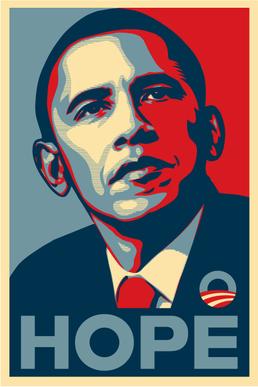
Shepard Fairey is a graffiti artist from Los Angeles best known for "Hope", a poster of Barack Obama that coincided with the US presidential election of 2008. In the summer of 2011, Fairey (by now a very mainstream "street artist") travelled to Copenhagen to launch an exhibition of his work. Whilst there he painted a large public mural featuring the word "peace" plus a dove and the figure "69". This appeared on the gable-end of a house adjacent to Ungdomshuset (the youth house) that once stood at Jagtvej 69 in Nørrebro. It was there that left-wingers used to gather - until, that is, it was demolished by the local authorities. This event is documented in Recent Danish History (2008) by the artist, Jens Haaning. It consists of eight postcards, the final one of which shows police attacking a group of demonstrators alongside a text that reads: "1st of March 2007: The police clear the Youth House at Jagtvej in Copenhagen and the building is demolished."

It seems that Fairey's work has been interpreted by some as a piece of official propaganda in support of the demolition, not least given that the artist received payment from the city council. This led to a very hostile reception. Fairey and his assistant were physically attacked and the mural they had produced was vandalised: paint bombs were thrown at it and the phrase "No peace!" was added. This has prompted Fairey to allow the work to be altered: the word "peace" has been replaced by a text reading "Intet glemt, intet tilgivet 69" (nothing forgotten, nothing forgiven 69). In addition, the lower register now shows protestors being confronted by riot squads whilst the blades of a police helicopter whirl overhead.

All this is a far cry from the habitual link between the Nordic countries and peace. It is therefore fitting that I should have found out about the erasure of that very word - PEACE - from Fairey's mural on the day that I gave my paper, "Banal Nordism: Recomposing an old song of peace" at the Nordisk historikermøte 2011 conference currently taking place in the Norwegian city of Tromsø.

Sources
Stanners, Peter (2011a) "Street artist's work opens old wounds", The Copenhagen Post, 03/08, accessed 13/08/2011 at, http://www.cphpost.dk/culture/culture/122-culture/51955-shepard-fairey.html

Stanners, Peter (2011b) "Controversial street artist assaulted after exhibition opening", The Copenhagen Post, 11/08, accessed 13/08/2011 at, http://www.cphpost.dk/culture/culture/122-culture/51980-controversial-street-artist-assaulted-after-exhibition-opening.html

Museum directors, journal editors and their go-betweens

5/8/2011

 
Nittve & Nolde
This blog posting and its associated article seeks to explore the nature and purpose of academic writing. It does so by setting out the background to a peer reviewed paper that I wrote and which appeared fleetingly in the online journal Museum and Society. Shortly after publication the chair of the journal's editorial board, Professor Richard Sandell, agreed to remove it following complaints from other members of the board. The reasons for this unusual action are outlined. So too are the wider implications that this might have for the field of Museum Studies. These thoughts prompt additional reflection on some of the issues tackled in my initial paper which sought to scrutinise Sweden's national museum of modern and contemporary art, Moderna Museet. It achieved this through the prism of the artists Neil Cummings and Marysia Lewandowska. Their collaborative practice was critiqued in connection with one of their patrons, the former director of Moderna Museet, Lars Nittve.

My abortive Museum and Society article is reproduced here in full and in its original form. This action mimics Cummings and Lewandowska's artwork, Errata (1996). Meaning "an error in writing or printing", the term "erratum" encapsulates my earlier paper. Richard Sandell quickly rectified this "error" by expunging it from the journal over which he currently presides. Its reappearance here constitutes an unofficial and undoubtedly unwelcome erratum to Museum and Society. Its presence is also intended as an erratum both to the practice of Cummings and Lewandowska and to the career of Lars Nittve. As with the original paper, my actions lack any endorsement from the named individuals or institutions. It is an act of parasitism that apes the so-called institutional critique of artists such as Cummings and Lewandowska: one that seeks to expose the positions of certain actors in the museum field – be they museum directors, artists or academics.

Burch, Stuart (2011) "A Museum Director and His Go-Betweens: Lars Nittve's Patronage of Neil Cummings and Marysia Lewandowska", Museum and Society, Vol. 9, No. 1, pp. 34-48, accessed 17 May 2011 at, http://www.le.ac.uk/ms/m&s/Issue%2025/burch.pdf.

Burch, Stuart (2011) "A Journal Editor and His Go-Betweens: Richard Sandell and the University of Leicester’s Museum and Society", uploaded 05/08 at http://www.stuartburch.com

Narva: past, present and future

4/8/2011

 
Sign of the times
Think back to the last time you travelled to some place new. What was going through your head? Excitement? Expectation? Nervousness at the prospect of venturing into the unknown? I experienced all of these emotions in the run up to my first trip to Narva in eastern Estonia - as I set out in the article Narva: past, present and future soon to be published in the magazine Lennuk.

Mrs Carré, dancing into the limelight

4/8/2011

 
Mrs Carré
Have you ever stopped to read a label in a museum and, instead of finding the object to which it refers, come across yet another label? An example of this can be seen by clicking the image to the left. It refers to a portrait of "Mrs Carré, dancer" by the Swedish artist, Lorentz Sparrgren (1763-1828). At the time the photograph was taken the object had been removed from its usual place amongst the miniatures of Sweden's Nationalmuseum. It could instead be found in another room of same museum, this time as part of a temporary exhibition entitled "Lust and Vice". The little portrait of the rather scantily clad Mrs Carré might not have moved very far, but its relocation meant that it had been reframed to tell a very different story.

This is a reminder that the meaning of things is neither fixed nor inherent. Instead, it is the physical and temporal context of an object that determines its significance. That's what makes museums such interesting places: their collections can be reformulated in all sorts of minor and major ways. Each change inside (and outside) the museum will alter the nature of the collection. So, even if Mrs Carré is destined to return to the comparative obscurity of the miniatures collection of Sweden's Nationalmuseum, she will have gained new-found exposure. Perhaps her fame might spread? The next time you look for her another label might have taken her place informing you that Mrs Carré is currently touring the great museums of the world in a glare of publicity. Like everyone, of course, she will at some point have to come back home. But what memories she'll have! Her exploits will be charted in lavishly illustrated exhibition catalogues, books and postcards. Who knows, she might one day become a saucy fridge magnet...

Spontaneous memorials to collective grief

4/8/2011

 
VVM letter
Letter left at the VVM on 21/03/2008
Traumatic events often lead to the creation of spontaneous memorials prompted by outpourings of collective grief. The spot where Yitzhak Rabin was assassinated, for example, became a shrine. The demise of Princess Diana led to something similar in the UK. However, the fact that her death occurred abroad meant that proxy spaces had to be found for the laying of flowers and leaving of messages. These sites tended to be situated outside civic or religious buildings as well as adjacent to existing monuments, including war memorials. However, unlike obelisks in stone or statues in bronze, these spontaneous acts of commemoration were temporary. The flowers for Diana are no longer there. Yet the memory of them remains.

A further such memorial is being carefully dismantled in central Oslo. The area outside the cathedral has become a makeshift shrine to those killed in the terrorist attacks of 22nd July. The flowers and other organic material will be composted and the wax from the candles recycled. But the messages and mementos are to be preserved in the national archive.

A similar process of preservation and documentation has taken place at the Vietnam Veterans Memorial in Washington DC. Artefacts left there continue to be gathered up and safeguarded to become part of a living and very public collection.

This will also be the case in Norway. Those traces of collective grief left on a street in central Oslo are destined to become sources of collective memory.

Further reading
Curtis, Paulette G. (2010) "Stewarding a living collection: the national park service and the Vietnam Veterans Memorial Collection", Museum Anthropology, Vol. 33, Iss. 1, pp. 49-61
Phelps, Angela (1998) "Memorials without location: creating heritage places", Area, Vol. 30 (2), pp. 166-8


Red Cross advertisement
The red rose became a rallying symbol in the wake of the terrorist attacks of 22nd July. It features here in an advertisement for the Norwegian Red Cross (photograph taken in Tromsø, 11/08/2011).

From ParaDesign to ParaMuseum

29/7/2011

 
I've just found out about an interesting-sounding exhibition that recently closed. Called ParaDesign it was hosted by the San Francisco Museum of Modern Art (25/02 - 24/07/2011). It apparently brought together:

"objects from SFMOMA's architecture and design collection that question the norms, habits, and conventions of design. The prefix para (whose meanings include "beyond" and "abnormal") has not previously been applied to design, yet marks a central focus of the museum's architecture and design collection."
Source: http://www.sfmoma.org/exhib_events/exhibitions/427 (accessed 29/07/2011)

This prompts two thoughts:
  • Do ParaMuseums exist and, if so, how do they differ from "normal" museums?
  • Did SFMOMA's exhibition include items of military design? Conventional accounts of design history tend to focus on aesthetically pleasing, domestic objects to the exclusion of items from other spheres - especially military equipment. This point is well made by Kjetil Fallan in his recent book Design History: Understanding Theory and Method (Oxford & New York, Berg, 2010). The image Fallan uses to visualise this missing aspect is a torpedo boat from Norway called, interestingly enough, ‘Nasty’ (see page 9). This absence of the military sphere from design history is an issue that I intend to take up in my chapter "Banal Nordism: Recomposing an old song of peace" due to be published in Performing Nordic Heritage (Peter Aronsson & Lizette Gradén, eds., Ashgate, c.2012).

A very depressing "Nordic space"

23/7/2011

 
For the past few years I have been involved in a research initiative entitled, "Nordic Spaces". Some of the outputs from this scheme are listed under 02 Articles. More information can be found here: http://nordicspaces.com.

Recent tragic events in Norway put lots of things into perspective - including our responsibilities as informed social commentators. This point was driven home to me by this media comment:

"While police continued to interrogate Breivik, who was charged with the mass killings, evidence of his increasingly far right world view emerged from an article he had posted on several Scandinavian websites, including Nordisk – a site frequented by neo-Nazis, far right radicals and Islamophobes since 2009."
Townsend, Mark et al (2011) "Norway attacks: Utøya gunman boasted of links to UK far right", The Guardian, 23/07, accessed 23/07/2011, at http://www.guardian.co.uk/world/2011/jul/23/norway-attacks-utoya-gunman

The fact that the word Nordisk has been invoked in association with something so utterly repugnant exposes a very depressing "Nordic space".
Forward>>
    Author
    an extinct parasite
    of several hosts
    Why parasite?

    Try the best you can

    Para, jämsides med.
    En annan sort.
    Dénis Lindbohm,
    Bevingaren, 1980: 90

    Picture
    Even a parasite like me should be permitted to feed at the banquet of knowledge

    I once posted comments as Bevingaren at guardian.co.uk

    Guggenheim New York, parasitized

    Archives

    July 2019
    July 2018
    May 2018
    April 2018
    March 2018
    February 2018
    July 2017
    June 2017
    March 2017
    January 2017
    November 2016
    October 2016
    May 2016
    April 2016
    March 2016
    August 2015
    September 2014
    August 2014
    November 2013
    August 2013
    June 2013
    April 2013
    March 2013
    February 2013
    January 2013
    December 2012
    November 2012
    October 2012
    September 2012
    August 2012
    July 2012
    June 2012
    May 2012
    April 2012
    March 2012
    February 2012
    January 2012
    December 2011
    November 2011
    October 2011
    September 2011
    August 2011
    July 2011

    Categories

    All
    Architecture
    Archive
    Art
    Commemoration
    Dénis Lindbohm
    Dennis Potter
    Design
    Dylan Thomas
    Ethics
    Framing
    Freedom Of Speech
    Heritage
    Heroes And Villains
    History
    Illicit Trade
    Landscape
    Media
    Memorial
    Museum
    Music
    Nordic
    Para
    Politics
    Rupert Murdoch
    Science
    Science Fiction
    Shockmolt
    Statue
    Tourism
    Words

    Stuart Burch
    View my profile on LinkedIn
    _
    Note    All parasitoids are parasites, but not all parasites are parasitoids
    Parasitoid    "A parasite that always ultimately destroys its host" (Oxford English Dictionary)


        I live off you
        And you live off me
        And the whole world
        Lives off everybody

        See we gotta be exploited
        By somebody, by somebody,             by somebody
       
        X-Ray Spex
            <I live off you>
        Germ Free Adolescents
            1978  

    From symbiosis
    to parasitism
    is a short step.
    The word is
    now a virus.
    William Burroughs, The word is now a virus
    William Burroughs
    <operation rewrite>

    Do nothing
    that can
    harm
    your host!

    Hal Clement
    <
    Needle>
    1950
Powered by Create your own unique website with customizable templates.